Build an interior wall — step by step
Split a room and create two — a stud wall built in a weekend.
This is a complete guide to build an interior wall yourself — step by step, with a material list, tools, a timeline and what it costs. It's written for anyone building at home without professional experience: count on 1–2 weekends and a material cost of around 3,000–8,000 kr.
Showing method: Stud wall with plasterboard on both sides
The price is an estimate based on typical material prices and can vary depending on size, material choice, location and store.
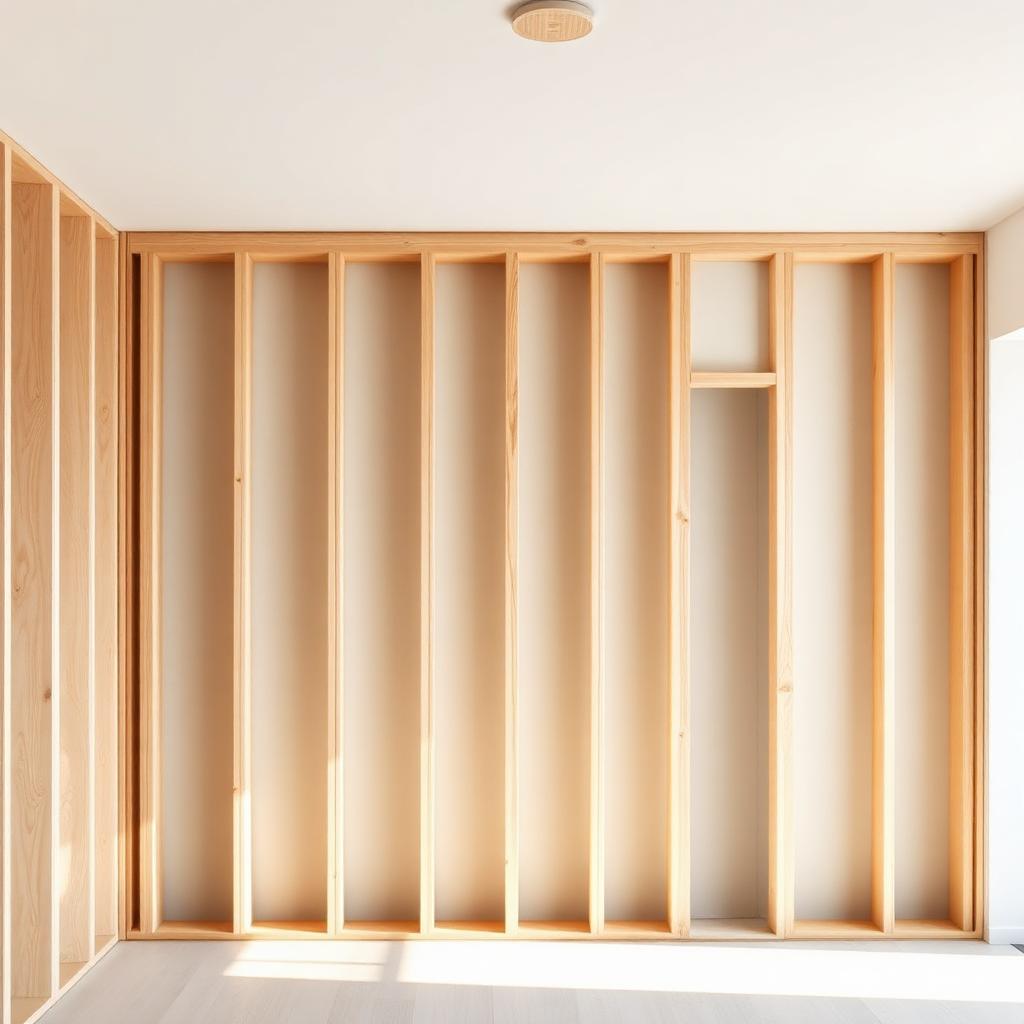
Which method suits you best?
Best for: Most dividing walls indoors — bedroom, office, walk-in closet.
Please note: Material quantities, prices and building methods are guidelines. Always check current prices, local regulations and product instructions before starting a project.
How an interior wall comes together
An interior wall is one of the most rewarding home projects — in two days you can split a room and create a new bedroom, office or walk-in closet. We'll cover building a sturdy stud frame, fixing it to floor and ceiling, and cladding it with plasterboard.
Materials for an interior wall — full list
Check items off while you shop — the list stays with you on the page.
Build an interior wall step by step
- 01
Plan and mark out
Measure where the wall should go. Mark on the floor with chalk or a chalk line. Use a plumb bob (or laser line) to transfer the line straight up to the ceiling — otherwise the wall ends up leaning.
Tip: Think about doorways now — the standard size is 9×21 (90 cm wide × 210 cm high). - 02
Find the ceiling joists
Tap on the ceiling or use a stud finder to locate the load-bearing ceiling joists. The head plate (the ceiling rail) must be screwed into a joist — otherwise it won't hold.
- 03
Screw down the sole plate and head plate
Screw the sole plate (bottom rail) to the floor at 60 cm intervals. If the floor is concrete, use plugs and concrete screws. Screw the head plate directly above into the ceiling, fixed into the joists.
- 04
Raise the vertical studs
Fit vertical studs at 60 cm centres between the sole plate and head plate. Check plumb on each stud before screwing. Toe-screw with two screws at each end.
Tip: 60 cm spacing suits both plasterboard (1200 mm wide) and standard mineral wool. - 05
Build the doorway
Fit two extra studs to frame the doorway (with a 1 cm margin on each side of the door frame). Add a horizontal rail as a header. Reinforce with a short stud above it.
- 06
Clad one side with plasterboard
Screw plasterboard to one side with plasterboard screws every 25 cm at the edges and every 30 cm in the middle. The screw should sink into the paper but not go through it — otherwise the strength is compromised.
- 07
Add the insulation
Press mineral wool in between the studs. It should sit snugly without being compressed. The insulation dampens sound significantly — without it, everything is heard straight through the wall.
- 08
Clad the other side
Screw plasterboard on the other side. Offset the joints from the first side so they don't line up directly opposite each other — this gives a stronger, quieter wall.
- 09
Fill and sand the joints
Lay joint tape over all the joints, fill over it, let dry and sand lightly. Fill a second time and sand again. Fill over the screw heads so they don't show under the paint.
Tip: Fill thinly twice rather than thickly once — it gives a much smoother surface. - 10
Paint or wallpaper
Prime the plasterboard first (otherwise it absorbs paint unevenly). Then paint two coats with a wall paint in your chosen colour.
Help specific to build an interior wall
How the time breaks down
A 3 metre interior wall is built in 1–2 weekends. The frame goes up quickly — filling takes the longest since it needs to dry between coats.
- Measuring, marking & plumbing1–2 hours
- Screwing down sole plate and head plate1–1.5 hours
- Raising vertical studs2–3 hours
- Building the doorway (if applicable)1 hour
- Cladding one side with plasterboard1.5 hours
- Fitting the mineral wool30 minutes
- Cladding the other side1.5 hours
- Filling, drying, sanding (2 rounds)3–4 h + 2 days' drying time
- Priming and painting (2 coats)2–3 h + drying time
How to save time
- Buy pre-cut studs at 2.4 m length — fits standard ceiling height directly, no cutting needed.
- Use a panel lifter if you're working alone — plasterboard is otherwise awkward to hold against the ceiling.
- Board one side on Saturday and fill the first coat the same day — then it has time to dry by Sunday.
Questions and answers about build an interior wall
How do you build an interior wall?
An interior wall is one of the most rewarding home projects — in two days you can split a room and create a new bedroom, office or walk-in closet. We'll cover building a sturdy stud frame, fixing it to floor and ceiling, and cladding it with plasterboard. The guide breaks the work into 10 steps — you start with plan and mark out, find the ceiling joists and screw down the sole plate and head plate and work your way forward at your own pace.
How much does it cost to build an interior wall?
Material cost is typically 3,000–8,000 kr. Total cost 3,000–8,000 kr for a wall 3 metres long and 2.4 metres high. Plasterboard and studs are the cheapest parts. The biggest items are studs 45×70 mm pine (~12 m) 400–700 kr, plasterboard 13 mm (4 pcs) 600–1,000 kr and mineral wool 70 mm (~7 m²) 500–900 kr. The price varies with size, material choice, location and store.
What materials do you need for an interior wall?
You'll need things like studs 45 × 70 mm pine, plasterboard 13 mm (1200 × 2600 mm), mineral wool 70 mm, wood screw 5 × 90 mm and plasterboard screw 3.5 × 45 mm — the full material list with quantities is in the guide and can be checked off while you shop. Tools you'll need at home: drill & batteries, screwdriver, jigsaw or handsaw and long spirit level.
How long does it take and how hard is it?
Count on 1–2 weekends for an interior wall. A 3 metre interior wall is built in 1–2 weekends. The frame goes up quickly — filling takes the longest since it needs to dry between coats. The difficulty level is moderate, so you can manage it without professional experience if you follow the steps in order.
Which method should I choose for an interior wall?
There are 3 common ways to build it: stud wall with plasterboard on both sides, sound-insulated double wall and glass wall with a timber frame. Choose a method at the top of the page — the guide, material list and cost then adapt to that solution.
What's the most common mistake?
The mistakes we see most often: screwing the head plate into plasterboard or chipboard in the ceiling alone — it must be fixed into a joist, forgetting to check plumb on the studs — the wall ends up crooked and it shows once furniture is placed against it and skipping the insulation — the wall becomes acoustically thin and every sound comes through. Read through the whole guide once before you start — that way you'll avoid most of them.
And that's it, done.
Take a step back, pour a cup of coffee and enjoy. You built it yourself.
Next project: Build a privacy screen/trellisDid this guide help you?
Your opinion helps us improve our content.
Built something you're proud of?
Send us photos of your finished project — we pick out and publish them as inspiration for others who want to build an interior wall.
Related indoor projects
If you're planning to build an interior wall, one of these projects is often a great fit to do at the same time.
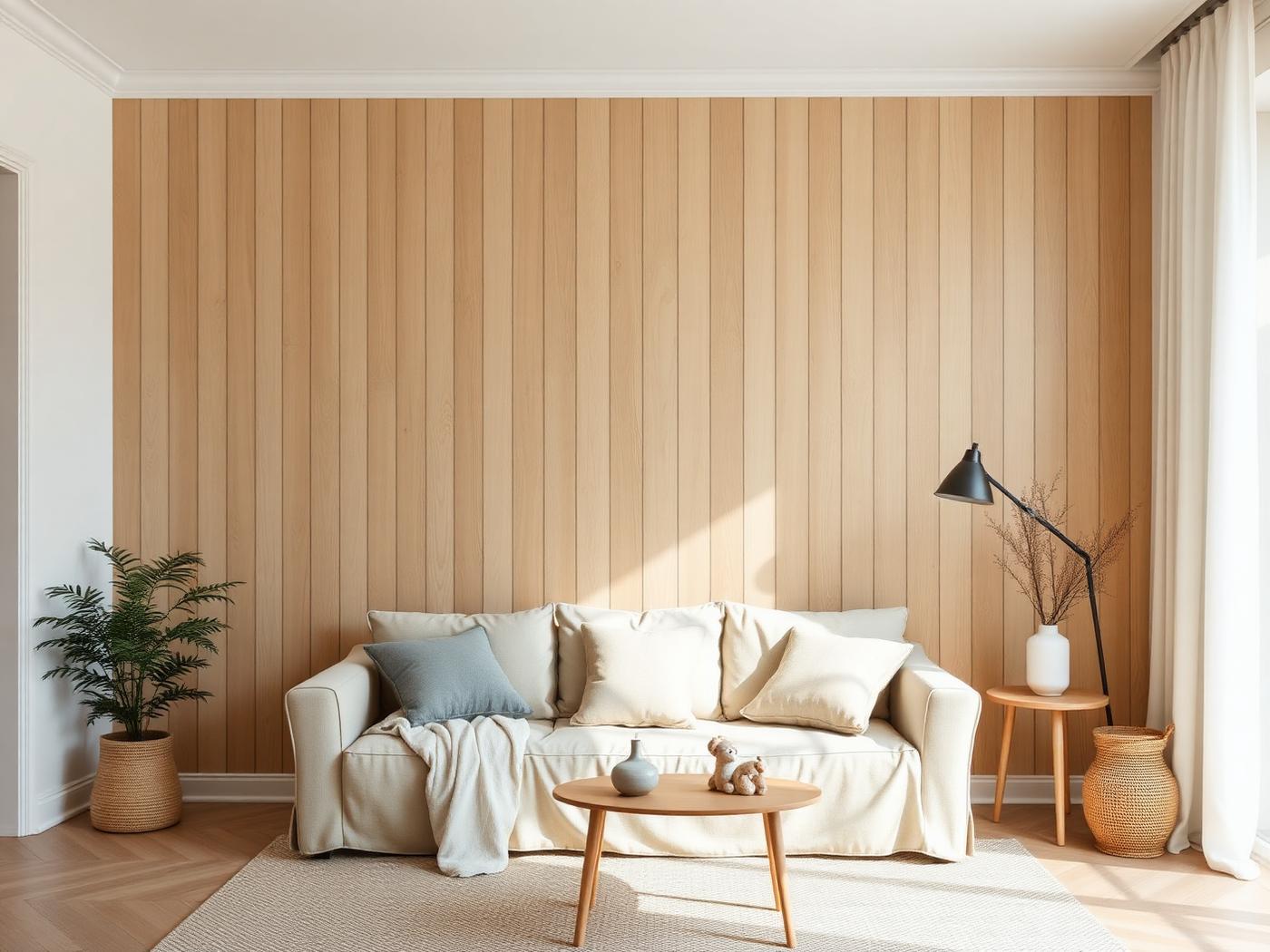
Install wall panelling
Transform a room with warm wood panelling — in a weekend.
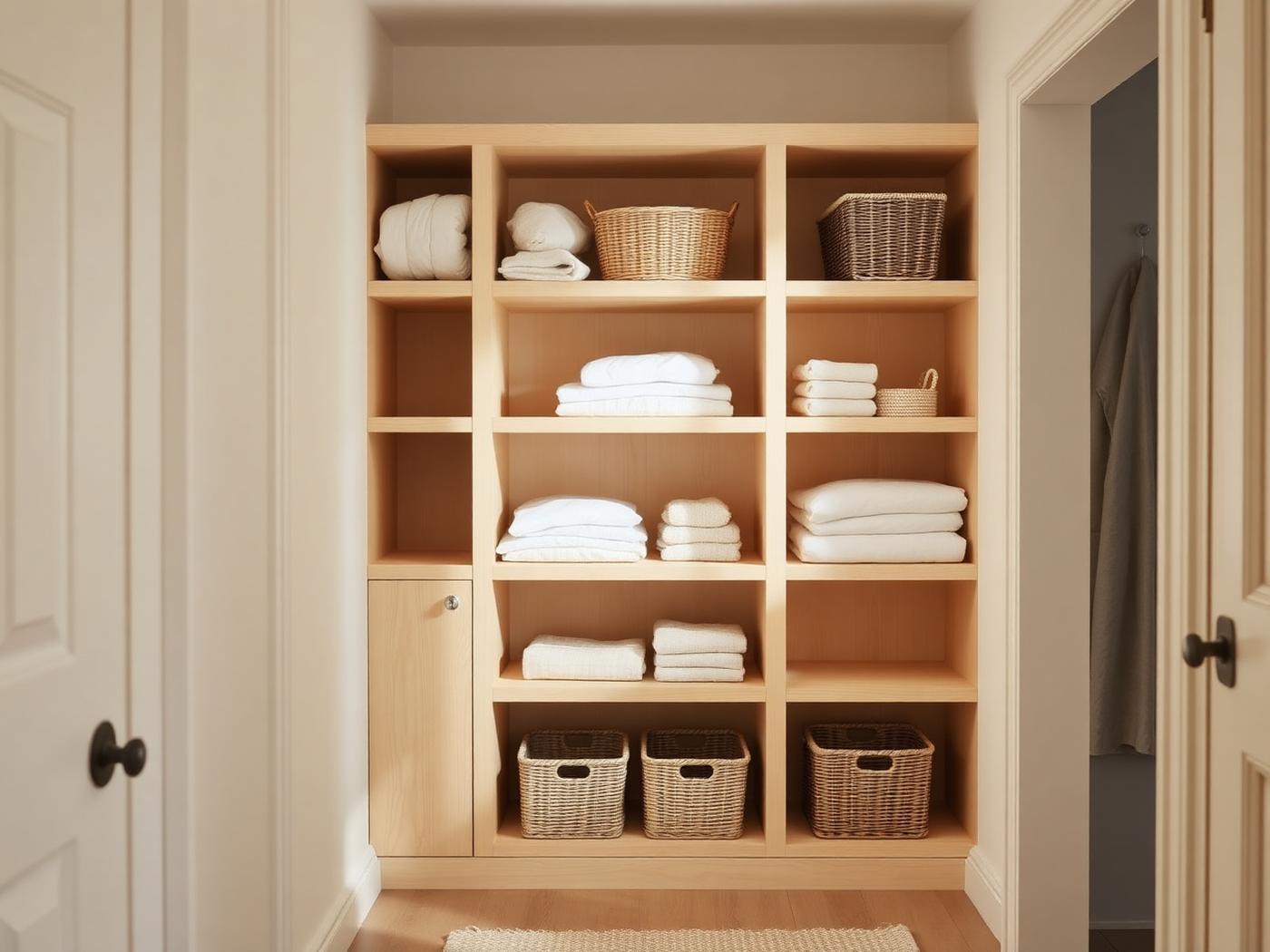
Build storage
Built-in shelving that looks like it's always belonged there.
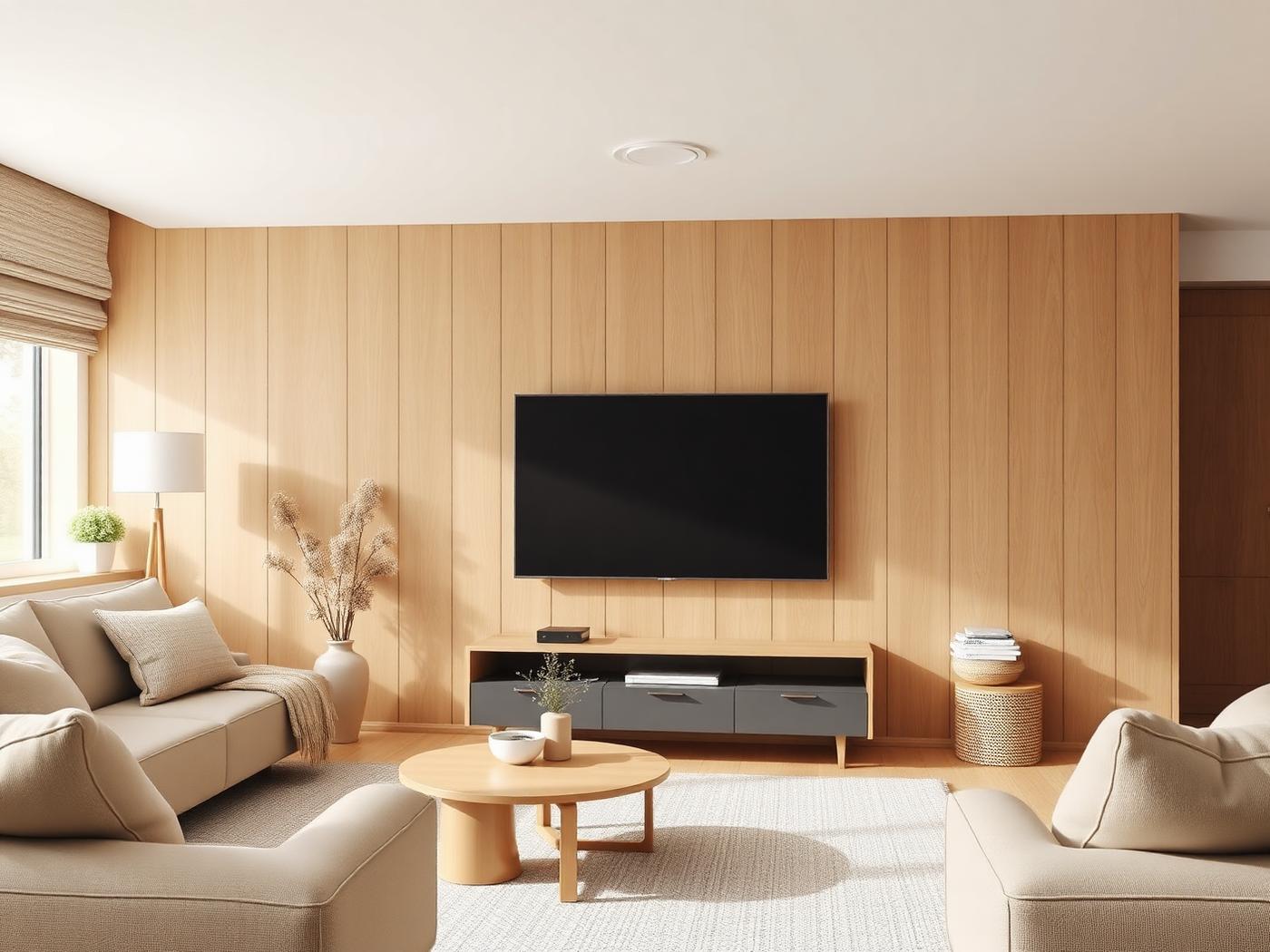
Mount a TV
Hang the TV straight, securely and with hidden cables — in an afternoon.