Build a deck — step by step
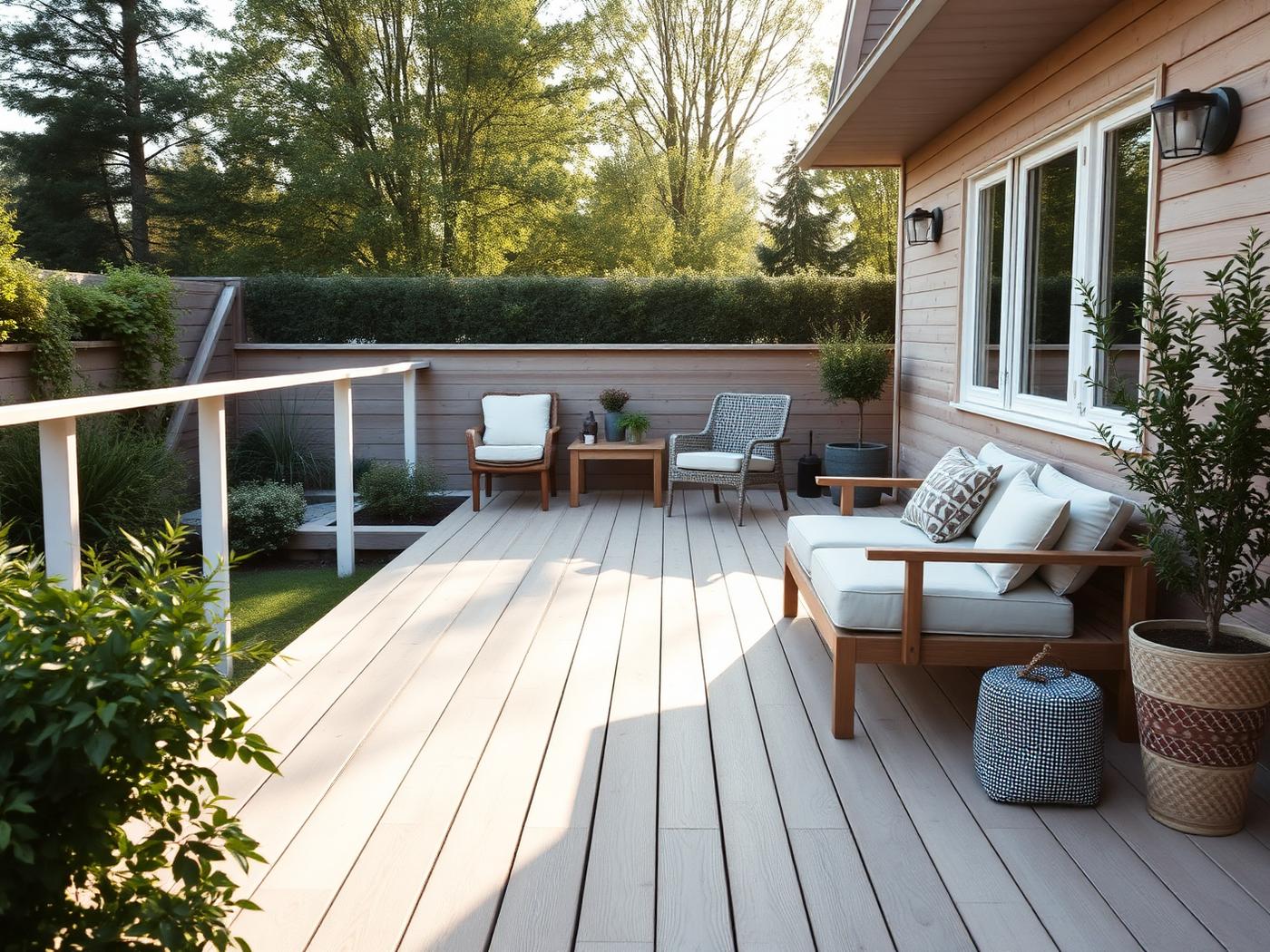
A classic timber deck built over six weekends — a place to breathe out.
This is a complete guide to build a deck yourself — step by step, with a material list, tools, a timeline and what it costs. It's written for anyone building at home without professional experience: count on 4–6 weekends and a material cost of around 15,000–35,000 kr.
Showing method: Classic deck on concrete piers
The price is an estimate based on typical material prices and can vary depending on size, material choice, location and store.
Which method suits you best?
Best for: Sloping plots, or when the deck needs to sit level with the threshold.
Please note: Material quantities, prices and building methods are guidelines. Always check current prices, local regulations and product instructions before starting a project.
How a deck comes together
A deck extends your living room out into the garden. With the right foundation and straight lines it'll last 20+ years. We'll walk through planning the dimensions, building a stable frame, and laying the decking evenly — without rushing.
Materials for a deck — full list
Check items off while you shop — the list stays with you on the page.
Build a deck step by step
- 01
Plan dimensions and location
Measure the area and draw a simple sketch. The deck should ideally sit 2 cm below the threshold so water drains away from the house. Mark the corners with stakes and string.
Tip: Lie down on the ground where the deck will be — see if the view is the one you want. - 02
Dig for the piers
Dig holes about 70 cm deep for each pier so they sit below the frost line. Put gravel in the bottom for drainage. The piers should form a grid pattern with no more than 1.5 metres between them.
- 03
Set the piers level
Use a long spirit level and a straight batten between the piers. The height must be exact — otherwise the deck will wobble. Adjust with gravel under each pier until everything is level.
Tip: Stretch a string between the outer piers as a reference. - 04
Build the frame
Screw the beams (joists on edge) into the pier brackets. Then fit joists across at 60 cm centres. Check the whole frame is square by measuring diagonally between the corners — the measurements should match.
- 05
Lay out the landscape fabric
Roll out landscape fabric under the whole deck so weeds can't grow through. It also keeps dust and insects down.
- 06
Screw down the decking
Start at the house. Lay the first board dead straight and screw with two screws into every joist. Leave 4–5 mm between the boards so they can expand with moisture. A nail between the boards works perfectly as a spacer.
Tip: Always pre-drill near the ends — otherwise the board will split. - 07
Trim the outer edges
Once all boards are screwed down, snap a chalk line along the outer edge and cut straight with a circular saw. That gives you a razor-sharp line along the whole deck.
- 08
Oil the wood
Wait until the decking is dry (ideally a week) and apply pigmented wood oil (clear or semi-transparent) — or wood tar if you want a rustic, dark finish. It protects against moisture and keeps the colour longer. Repeat every year.
Help specific to build a deck
How the time breaks down
A deck of around 22 m² is built over 4–6 weekends. Digging and the piers take the longest — the decking itself goes quickly.
- Planning, measuring & marking outWeekend 1 morning (3–4 h)
- Digging 9 pier holes 70 cm deepWeekend 1 (6–8 h)
- Levelling piers + curing timeWeekend 2 (4 h + 1 day resting)
- Building the frame (beams + joists)Weekend 2–3 (8–10 h)
- Laying & screwing decking (~22 m²)Weekend 3–4 (10–14 h)
- Trimming outer edges + oilingWeekend 5 (4–6 h + drying time)
How to save time
- Hire a motorised earth auger (350 kr/day) — you'll save at least a whole weekend on digging.
- Buy a decking screw jig for your driver — you'll work twice as fast and get even spacing.
- Pre-drill the first and last screw on every board — avoid having to cut off split boards.
Questions and answers about build a deck
How do you build a deck?
A deck extends your living room out into the garden. With the right foundation and straight lines it'll last 20+ years. We'll walk through planning the dimensions, building a stable frame, and laying the decking evenly — without rushing. The guide breaks the work into 8 steps — you start with plan dimensions and location, dig for the piers and set the piers level and work your way forward at your own pace.
How much does it cost to build a deck?
Material cost is typically 15,000–35,000 kr. Total cost 15,000–35,000 kr for a ~22 m² deck. The decking accounts for roughly half the budget. The biggest items are decking 28×120 mm pine (~22 m² + 5% wastage) 8,000–14,000 kr, joists 45×145 mm pressure-treated (~60 m) 3,500–5,500 kr and concrete piers (9 pcs) + pier brackets 1,500–2,200 kr. The price varies with size, material choice, location and store.
What materials do you need for a deck?
You'll need things like joists 45 × 145 mm pressure-treated, decking 28 × 120 mm pine, concrete piers, pier brackets and decking screws a4 stainless 4.2 × 55 mm — the full material list with quantities is in the guide and can be checked off while you shop. Tools you'll need at home: drill & batteries, mitre saw or circular saw, spirit level (60 cm) and tape measure & chalk.
How long does it take and how hard is it?
Count on 4–6 weekends for a deck. A deck of around 22 m² is built over 4–6 weekends. Digging and the piers take the longest — the decking itself goes quickly. The difficulty level is moderate, so you can manage it without professional experience if you follow the steps in order.
Which method should I choose for a deck?
There are 3 common ways to build it: classic deck on concrete piers, low deck on paving slabs + membrane and deck on ground screws. Choose a method at the top of the page — the guide, material list and cost then adapt to that solution.
What's the most common mistake?
The mistakes we see most often: not digging deep enough — the deck lifts in winter, too little gap between the boards — they cup once moisture arrives and forgetting to check the diagonal measurement on the frame — the whole deck ends up skewed. Read through the whole guide once before you start — that way you'll avoid most of them.
And that's it, done.
Take a step back, pour a cup of coffee and enjoy. You built it yourself.
Next project: Build a pergolaDid this guide help you?
Your opinion helps us improve our content.
Built something you're proud of?
Send us photos of your finished project — we pick out and publish them as inspiration for others who want to build a deck.
Related outdoor projects
If you're planning to build a deck, one of these projects is often a great fit to do at the same time.
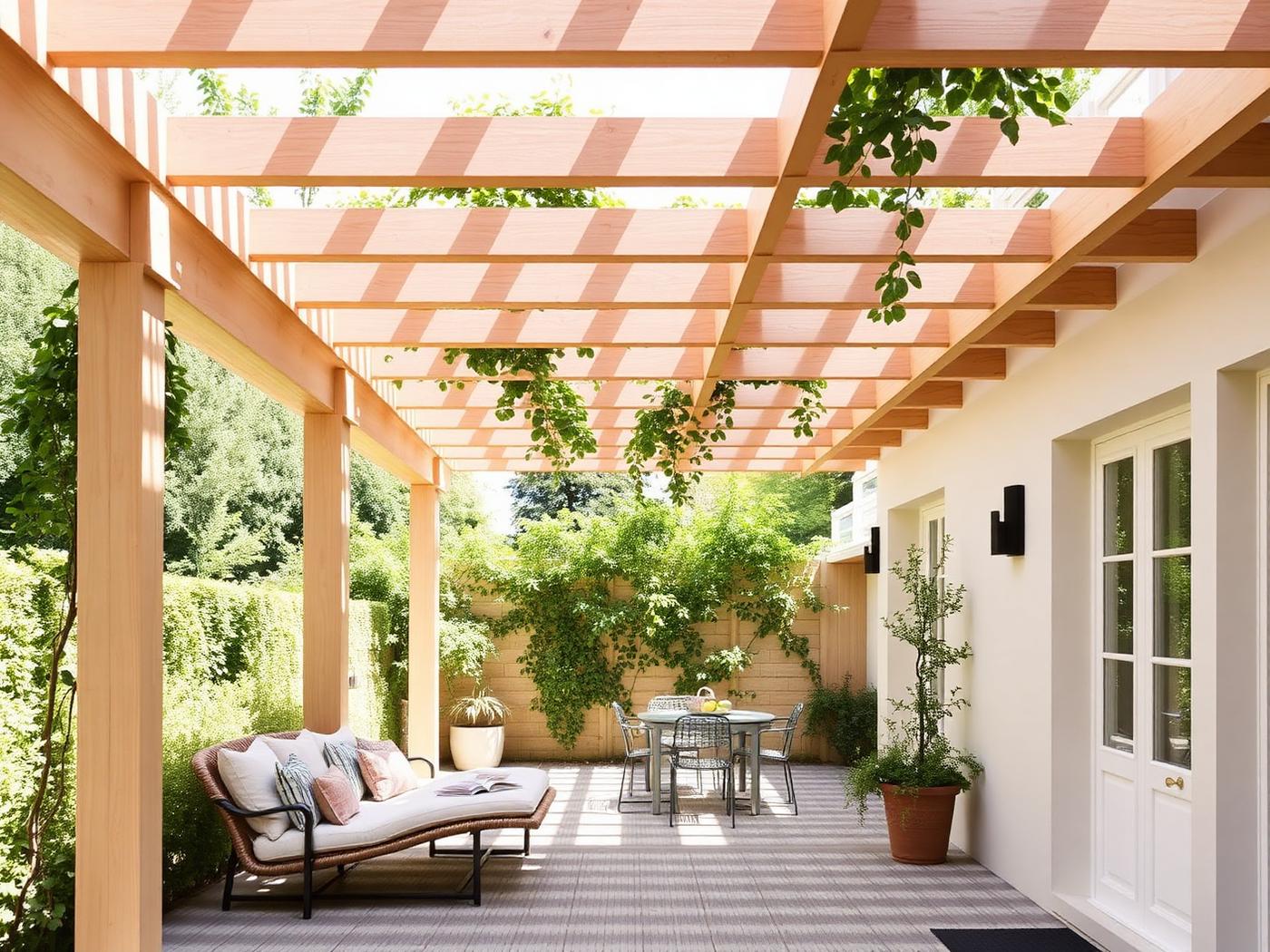
Build a pergola
Create an outdoor room with an airy pergola in light-coloured wood.
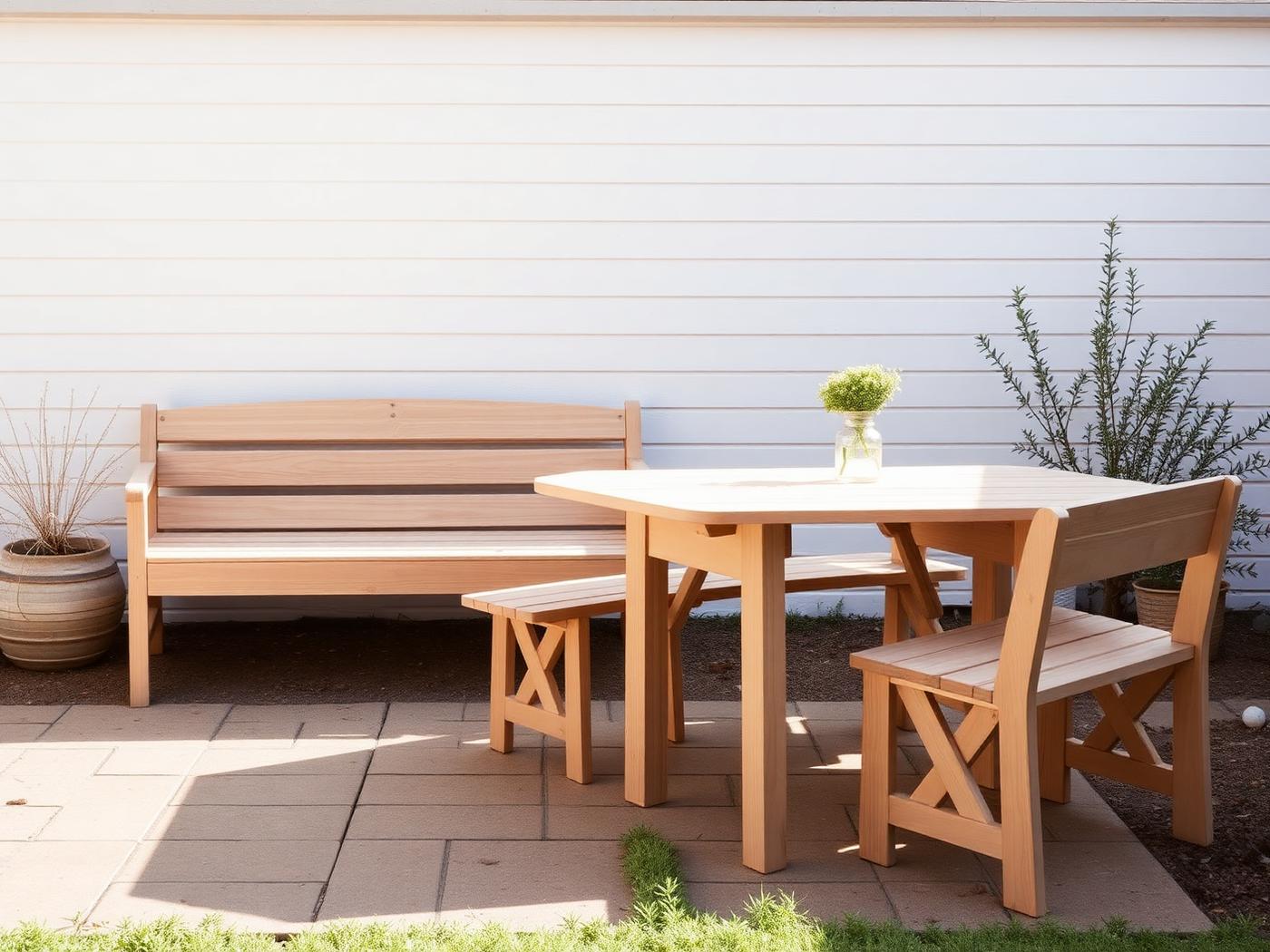
Build outdoor furniture
A sturdy garden bench that lasts for decades.
Replace a window
A new window means a warmer house and a quieter home — and it's a doable DIY job.