Build steps up to a deck — step by step
Simple, sturdy steps up to the deck — with a handrail that feels safe.
This is a complete guide to build deck stairs yourself — step by step, with a material list, tools, a timeline and what it costs. It's written for anyone building at home without professional experience: count on 1–2 weekends and a material cost of around 3,500–9,000 kr.
Showing method: Straight steps with a handrail on one side
The price is an estimate based on typical material prices and can vary depending on size, material choice, location and store.
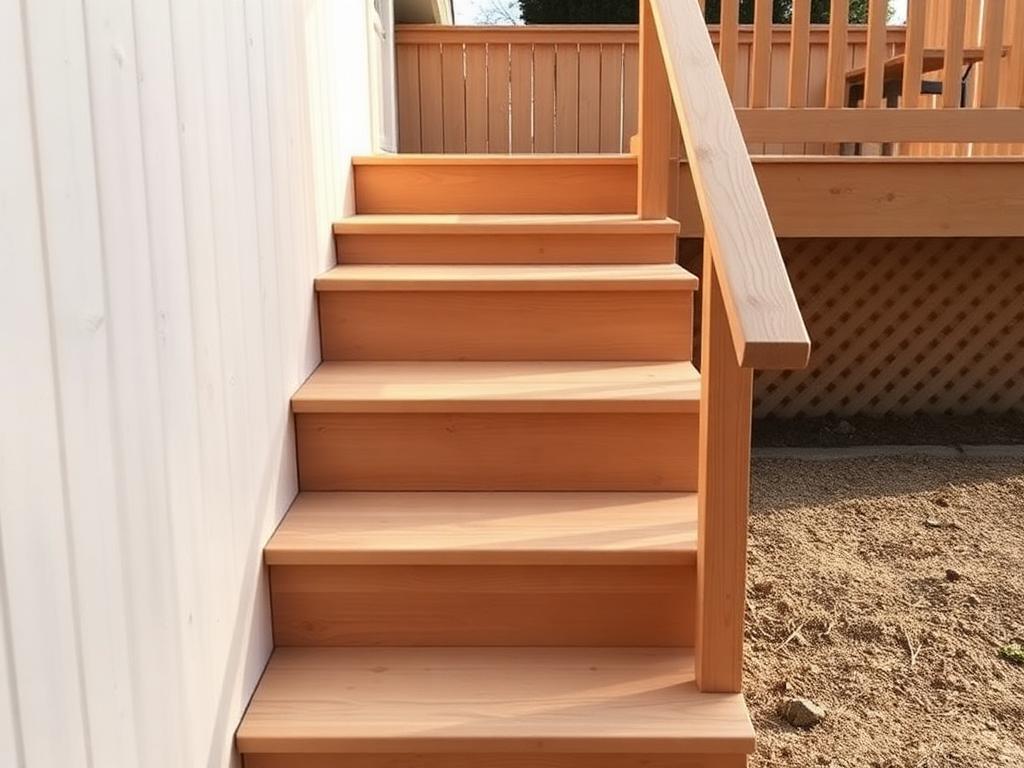
Which method suits you best?
Best for: Most decks up to 90 cm high — simple, sturdy and quick to build.
Please note: Material quantities, prices and building methods are guidelines. Always check current prices, local regulations and product instructions before starting a project.
How deck stairs comes together
Deck steps are built on the same principles as the deck itself: two stringers with cut-in treads, finished with a handrail that gives a secure way up. With the right measurements (riser ~17 cm, tread depth ~28 cm) the steps are comfortable to use — and last for decades in pressure-treated timber.
Materials for deck stairs — full list
Check items off while you shop — the list stays with you on the page.
Build deck stairs step by step
- 01
Measure the height from ground to deck
Measure from the finished ground level up to the top of the deck. Divide the height by about 17 cm to get the number of steps. A common 60 cm deck gives ~4 steps, 90 cm gives ~5–6 steps.
Tip: Better an extra step than one that's too high — 18 cm is the maximum for a comfortable rise. - 02
Mark out the stringers
On the stringer timber, mark each step with a try square — riser downward, tread forward. Cut out the zigzag pattern where the treads will rest, using a jigsaw.
Tip: Make a template from the first stringer, lay it on top of the second and trace it — that way the stringers come out identical. - 03
Prepare the lower support
Set two ground screws or concrete piers where the stringers will rest at the bottom. This stops the steps from standing directly on damp ground and starting to rot.
- 04
Fit the stringers
Screw the top end of the stringers to the deck's rim joist with heavy-duty angle brackets. Check with a spirit level that both stringers lean equally. Screw the bottom ends to the ground screw/pier.
- 05
Screw on the treads
Lay two boards 28 × 145 mm side by side per step, with a 5 mm gap between them. Fix with angle brackets from underneath — no screws visible from above.
Tip: Leave a small overhang (~25 mm) at the front edge — it looks neater and gives extra tread depth without extra material. - 06
Put up the handrail posts
Screw two posts (1.2 m) to one side of the steps — one at the top and one at the bottom — directly into the stringer with two heavy-duty screws per post.
- 07
Fit the handrail and top rail
Screw a handrail rail between the posts at the same angle as the steps. On top, fit a planed handrail that runs the whole way up. Sand the edges slightly so nothing catches.
Tip: The top of the handrail should sit about 90 cm above the tread nosing — that makes it comfortable to hold. - 08
Oil or stain
Apply two coats of oil or stain once the timber has dried. Bear in mind the handrail gets the most wear — it will need topping up more often than the rest.
Help specific to build steps up to a deck
How the time breaks down
Steps with 4–5 treads and a handrail are built in 1–2 weekends. Most of the time goes into marking out and cutting the stringers correctly.
- Measuring & calculating steps1 hour
- Preparing the lower support1–2 hours
- Marking & cutting the stringers3–4 hours
- Fitting stringers to the deck1 hour
- Screwing on the treads2 hours
- Fitting handrail & top rail2–3 hours
- Oiling or staining1 hour + drying time
How to save time
- Make a full-scale cardboard template for the first step — it saves you mistakes on the more expensive stringer timber.
- Work in pairs when fitting the stringers — one holds, one screws.
- Always pre-drill in pressure-treated timber — it's harder than ordinary pine.
Questions and answers about build steps up to a deck
How do you build deck stairs?
Deck steps are built on the same principles as the deck itself: two stringers with cut-in treads, finished with a handrail that gives a secure way up. With the right measurements (riser ~17 cm, tread depth ~28 cm) the steps are comfortable to use — and last for decades in pressure-treated timber. The guide breaks the work into 8 steps — you start with measure the height from ground to deck, mark out the stringers and prepare the lower support and work your way forward at your own pace.
How much does it cost to build deck stairs?
Material cost is typically 3,500–9,000 kr. Total cost 3,500–9,000 kr for steps with 4–5 treads and a handrail on one side. The biggest items are stringer timber 45×220 mm (2 pcs) 600–1,200 kr, tread timber 28×145 mm (~8 pcs) 600–1,200 kr and posts & handrail timber 500–1,000 kr. The price varies with size, material choice, location and store.
What materials do you need for deck stairs?
You'll need things like stringer timber 45 × 220 mm pressure-treated, tread timber 28 × 145 mm pressure-treated, posts 70 × 70 mm pressure-treated, handrail rail 45 × 95 mm and planed handrail 45 × 70 mm — the full material list with quantities is in the guide and can be checked off while you shop. Tools you'll need at home: circular saw or handsaw, drill & batteries, try square & folding rule and spirit level.
How long does it take and how hard is it?
Count on 1–2 weekends for deck stairs. Steps with 4–5 treads and a handrail are built in 1–2 weekends. Most of the time goes into marking out and cutting the stringers correctly. The difficulty level is moderate, so you can manage it without professional experience if you follow the steps in order.
Which method should I choose for deck stairs?
There are 3 common ways to build it: straight steps with a handrail on one side, l-shaped steps with a landing and wide steps across the whole deck edge. Choose a method at the top of the page — the guide, material list and cost then adapt to that solution.
What's the most common mistake?
The mistakes we see most often: miscounting the number of steps — the top or bottom step ends up a different height from the rest, and everyone trips on it, letting the stringers sit directly on the ground — the timber soaks up moisture and starts rotting within a few years and screwing the handrail into only one post — it noticeably wobbles after a winter. Read through the whole guide once before you start — that way you'll avoid most of them.
And that's it, done.
Take a step back, pour a cup of coffee and enjoy. You built it yourself.
Next project: Build a decked pathDid this guide help you?
Your opinion helps us improve our content.
Built something you're proud of?
Send us photos of your finished project — we pick out and publish them as inspiration for others who want to build steps up to a deck.
Related outdoor projects
If you're planning to build steps up to a deck, one of these projects is often a great fit to do at the same time.
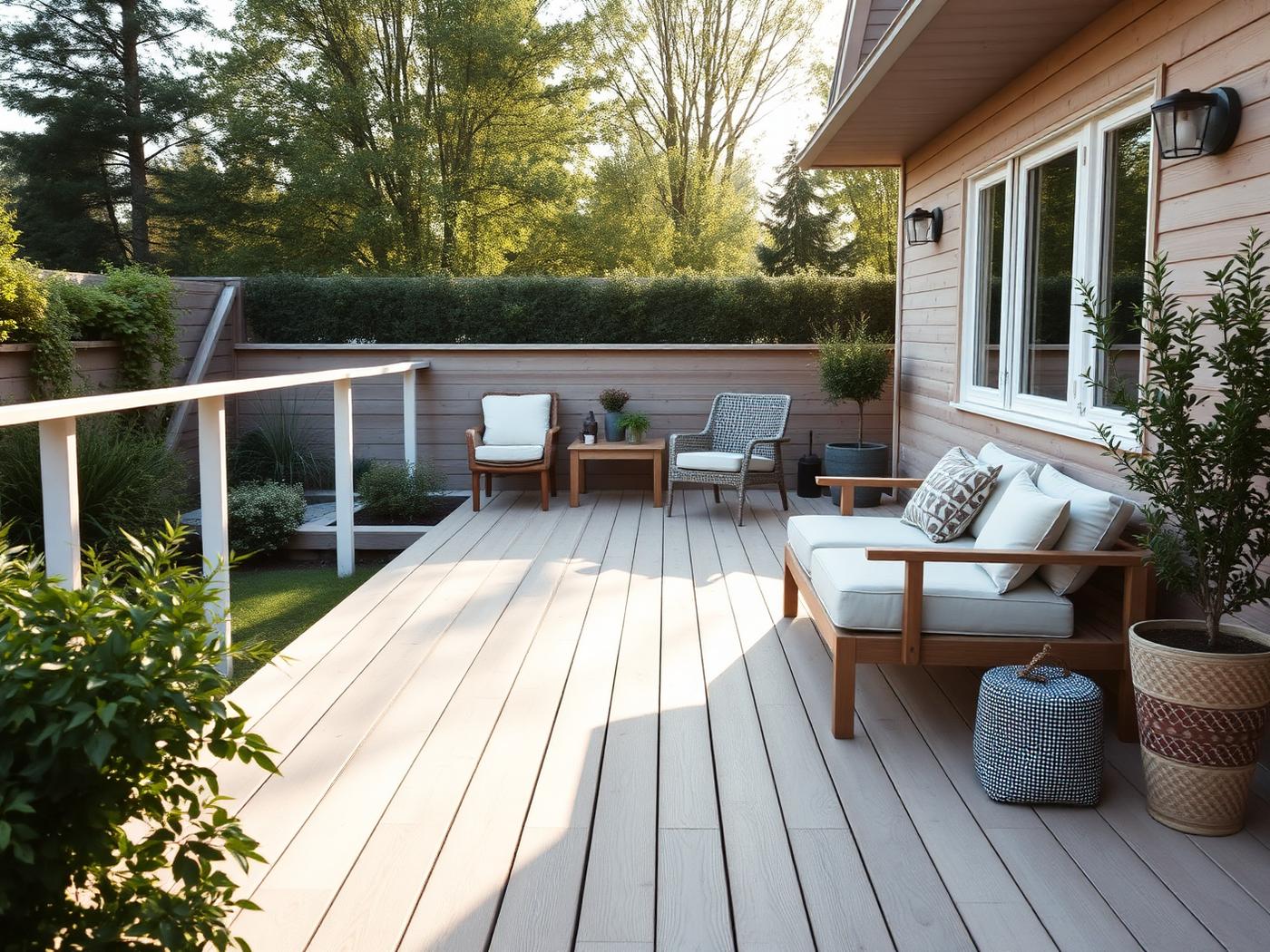
Build a deck
A classic timber deck built over six weekends — a place to breathe out.
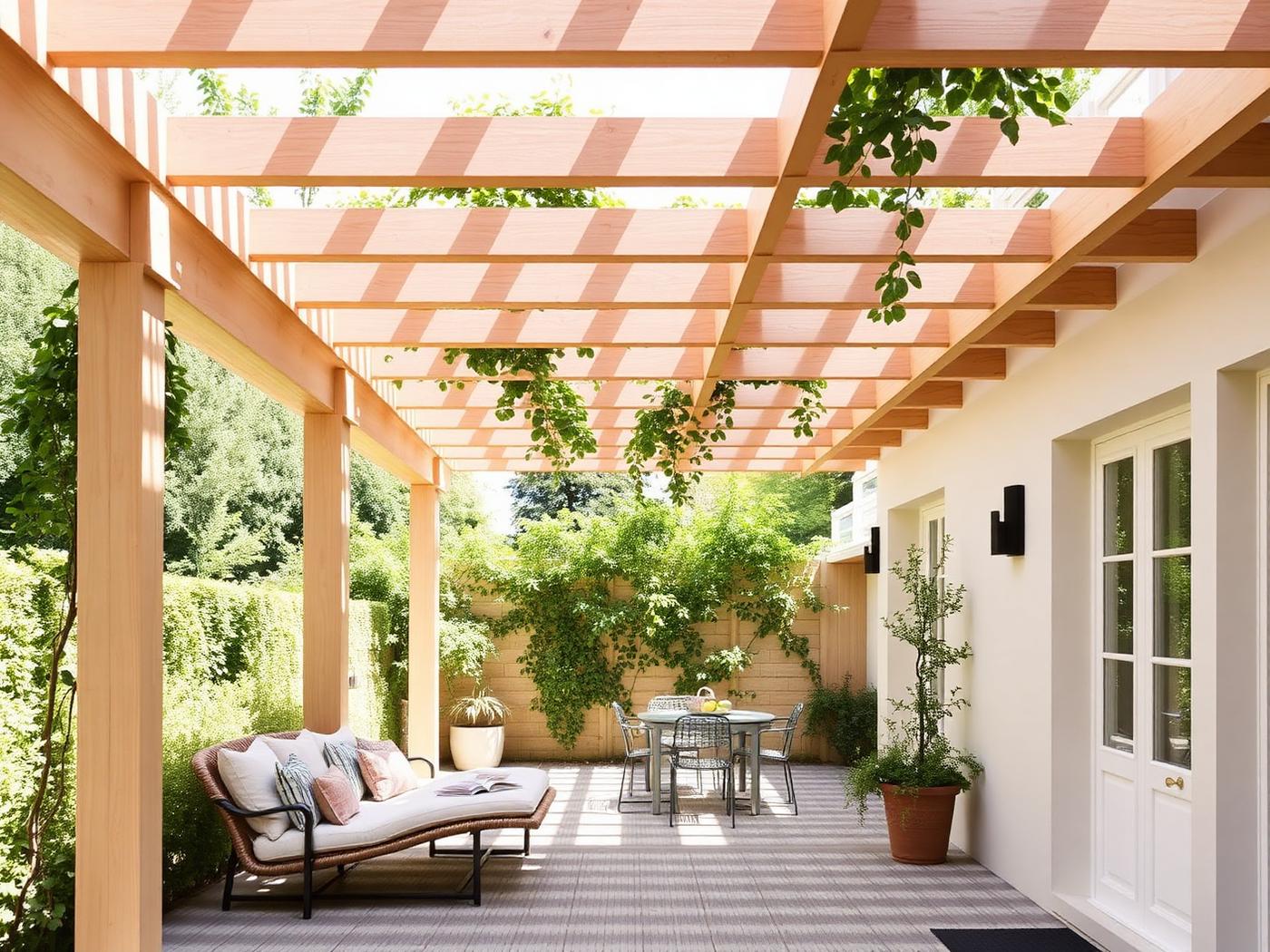
Build a pergola
Create an outdoor room with an airy pergola in light-coloured wood.
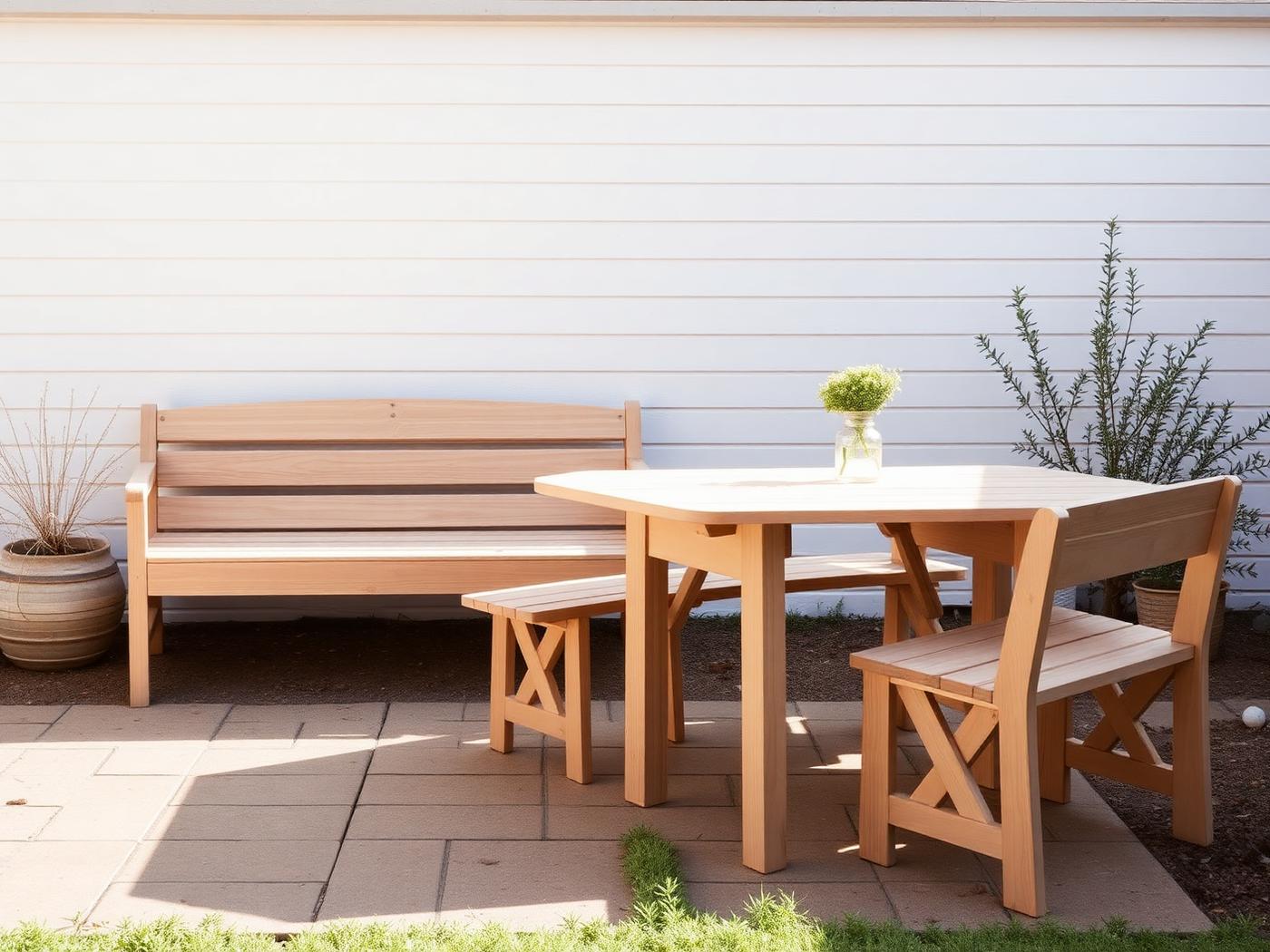
Build outdoor furniture
A sturdy garden bench that lasts for decades.